
Where to Buy a Cotton Candy Vending Machine: Dealer vs Marketplace vs Factory-Direct
No single channel is the right place to buy a cotton candy vending machine for every buyer. The choice depends on what you can handle yourself after the sale. A dealer is the better route when you need local installation, fast service and one unit, and you accept paying for that convenience. A marketplace suits a price-led purchase where you can verify the unit and support it yourself. Factory-direct makes sense when you need configuration control, certification planning, spare parts and support across several sites, and can manage freight and import. Compare the three on landed cost and accountability rather than sticker price. The cotton candy vending machine range is the reference point for what you are actually comparing.
It helps to treat the machine as a retail format, not a one-off gadget. Cotton candy vending as a retail format rewards operators who can keep the unit running and stocked at high-footfall sites, which is exactly where channel support starts to matter.
The criteria that should decide the channel
Six criteria separate the options, and each one changes either your cost or your risk. Score each channel on the same six before you negotiate.
- Configuration control: can the channel guarantee the exact model, options, software and firmware you specify, or will it substitute a similar unit?
- Certification and documentation: who provides the certificate and the technical file, what scope they cover, and do they match your destination and importer obligations?
- Customization: can the channel configure branding, interface language, media and payment for your market, or only sell a standard unit?
- Parts and service: who stocks spare parts, trains your staff and responds to faults, and how fast can they reach the machine?
- Landed cost: unit price plus freight, duty, certification, installation, spare parts and the cost of expected downtime.
- Accountability: who is contractually responsible if the unit fails or the certification turns out to be wrong, and what recourse do you have?

Dealer, marketplace, and factory-direct compared
The matrix below compares the three channels structurally. It is a starting point, not a verdict on any specific vendor, so confirm each cell with the party you are actually buying from.
| Criterion | Dealer | Marketplace | Factory-direct |
|---|---|---|---|
| Configuration control | Partial: limited to the stock and options the dealer carries | Weak: listings often blur model and options | Strong: built to the specification you approve |
| Certification and documentation | Partial: depends on the dealer's access to the technical file | Weak: scope often unclear or unstated | Strong: certificate planning matched to your market |
| Customization | Partial: branding limited to dealer capability | Weak: standard units only | Strong: colors, logo, language, media, payment, OEM/ODM |
| Parts and service | Strong: local response and installation | Weak: buyer usually self-supports | Strong on parts and training, remote on response |
| Landed cost | Higher unit price to fund local service | Lowest sticker, highest hidden cost risk | Competitive unit cost, buyer carries freight and import |
| Accountability | Clear locally, bounded by the dealer's depth | Weakest and hardest to enforce | Clear in contract, but cross-border to enforce |
Swipe horizontally to view the full table.
Dealer. Choose a dealer when you are placing one or a few units in a city where you need hands-on installation, fast fault response and someone to train staff on site. The dealer's value is proximity and service capacity, so verify that capacity before you pay for it. Ask for the models they actually stock, the spare parts they hold, the technicians they can dispatch and their access to the technical file. The trade-off is real: you usually pay more per unit and accept a narrower model and customization range than a factory can offer. Treat a dealer as a poor fit when they cannot show the certificate scope or a parts list for the model they are selling.
Marketplace. A marketplace is the right route when you want the lowest sticker price and fast availability on a standard model, and you can inspect and support the unit yourself. That last condition is the one buyers underestimate. Listings frequently mix models, options and accessories, and the seller may not be the manufacturer. Before paying, confirm the exact model and serial, the certificate and its scope, the manual language and where spare parts come from. Walk away when the seller cannot tell you who manufactures the unit or what certification covers it.
Factory-direct. Buy direct when you need configuration control, OEM or ODM customization, certification planned for your market, a spare parts and training package, or support across several sites. The factory-direct manufacturing and service model keeps engineering, customization and production in one place, which is what makes a non-standard configuration possible. The trade-off is that you take on freight, duty, customs clearance and local installation labor, and you accept a longer path from order to operation. If you are not set up to import or to arrange local electrical work, a dealer or a freight partner becomes part of the plan, not an optional extra.
What you are specifying, and why the channel changes it
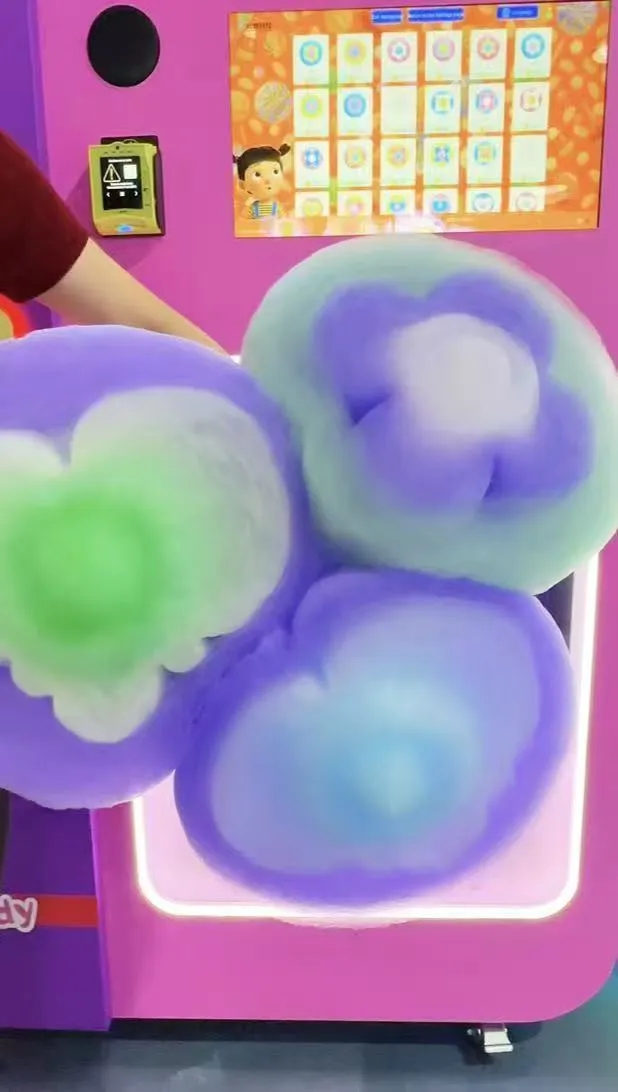
The physical and electrical requirements decide how much support you need after delivery. The CB328, a common commercial model, measures 132 × 66 × 205 cm and draws up to 2,500 W, which is 20 A at 110 V or 10 A at 220 V. That is not a plug-anywhere load: it needs a suitable circuit and a venue that can supply it. If you buy through a marketplace without installation support, the electrical compliance and siting are yours to solve. The CB328 cotton candy vending machine specification is the one to hand to your electrician and your landlord before you order.
Model choice also interacts with channel. A classic cart cabinet and a vintage cart cabinet suit different venues, and the pattern range differs by model. The CB730 vintage cart model supports hundreds of color patterns for family and festival sites, while compact tabletop units serve smaller indoor spaces. A dealer will usually offer what is in stock; a factory can build the model and options you specify. Decide the model before you choose the channel, or the channel will decide it for you.
Customization is the clearest dividing line. Branding, interface language, media and payment configuration are what separate a generic purchase from a branded retail point,and they are the part of the offer a marketplace cannot supply. If your plan depends on those changes, OEM and ODM customization belongs in the first conversation, because custom artwork and payment integration add cost and time before production. Standard models move faster; custom models fit the brand but take longer. Price that difference into the comparison instead of treating it as free.

Total landed cost: what to add to the sticker
Sticker price is the least reliable number in the decision. Build a landed-cost line for each channel and make the seller quote against it, so the comparison is like for like.
| Cost line | Why it differs by channel | What to ask |
|---|---|---|
| Unit price and options | Dealer margins and marketplace competition move the base price | Is this the final configured price, with the options listed? |
| Freight and insurance | Factory-direct shifts this to you; dealers may bundle it | Is delivery to my door included, and who insures transit? |
| Duty, tax and customs | Only relevant on cross-border purchases | Who is the importer of record, and what are the landed charges? |
| Certification and testing | A factory can plan it; a marketplace may leave it to you | Which certificate covers this model in my market, and who pays for any gap? |
| Installation and electrical | Dealers often install; direct buyers arrange it | Who commissions the unit and confirms the circuit? |
| Spare parts and training | Strongest direct, weakest on a marketplace | What parts kit ships with the unit, and who trains my staff? |
| Downtime risk | Depends on how fast the channel can respond | What is the response path and the expected parts lead time? |
Swipe horizontally to view the full table.
Two buyers can pay the same unit price and end up with very different total costs once freight, certification and a week of downtime are counted. Ask each channel for a landed-cost figure, or itemize it yourself from their quotes, before you compare headline prices. A slightly higher unit price with local parts and training can cost less over a year than a cheaper marketplace unit that sits idle waiting for a part.
Questions to ask and red flags to screen
Ask every channel the same core questions, then judge the answers rather than the sales pitch. The answers also tell you which channel the seller actually is.
- Which exact model and configuration are you quoting, with a written option list?
- Which certificate covers this unit in my country, who issued it, and what product scope does it state?
- What spare parts ship with the machine, and which parts do you stock locally?
- Who installs and commissions the unit, and who trains the operator?
- What is included in the price, and what is billed separately as freight, duty or installation?
- What is the recourse if the unit arrives damaged, non-compliant or not as specified?
Red flags differ by channel. On a marketplace, treat a missing certificate scope, an unnamed manufacturer, stock photos instead of the actual unit and no serial number as reasons to stop. At a dealer, worry when the price premium is not matched by local stock, technicians or documentation access. With a factory, worry when the technical file, certification plan or recourse terms stay vague after you ask twice. In all three cases, unclear accountability is the signal that matters more than a discount.
FAQs
Is factory-direct always cheaper than buying from a dealer?
No. Factory-direct usually lowers the unit price but moves freight, duty, customs and local installation onto you. A dealer bundles some of that into a higher price. Compare landed cost for the same configuration, including a spare parts allowance and an estimate for downtime, then decide which total is lower for your situation.
Can I buy the same cotton candy vending machine on a marketplace?
You may find the same or a similar model, but a listing does not guarantee the same configuration, certification or support. Confirm the exact model and serial, the manufacturer, the certificate and its scope, and where spare parts come from. If the seller cannot answer those, the apparent saving carries risk that is hard to recover.
Who handles certification for my country?
It depends on the channel and on your role as importer. The machines are offered with certification options such as CB, CE, TUV, UL, CSA, RoHS, UKCA, SAA, FDA and PSE, but the applicable set depends on your destination. Ask who provides the certificate and its scope, and confirm importer obligations with your customs broker or local authority before shipping.
Do I need a dealer to install the machine?
Not always, but the CB328 draws up to 2,500 W at 20 A on 110 V or 10 A on 220 V, so it needs a suitable circuit and a correct siting. If you can arrange licensed electrical work and follow the installation guidance, you can install it yourself. If not, a dealer or a local technician is the safer route.
What should I confirm before paying a deposit?
Confirm the written configuration and option list, the certificate and its scope for your market, the spare parts kit and local parts availability, the installation and training scope, what the price includes, and the recourse if the unit is late, damaged or non-compliant. Get the lead-time basis in writing, including whether it starts at deposit, artwork approval or production slot.
Turn Your Idea Into a Vending Machine People Remember.
Share your market, product concept and quantity. Our team will prepare a tailored OEM/ODM proposal.