
 EN
 es
 fr
 pt
 ru
 ar
 de
 ja
 ko
 he
 tr
 nl
 it
 pl
 uk
 sk
 th
 da
 ro
 sv
 lt
 bg
 fi
 hr
 no
 ga
 sl
Which Cotton Candy Machine Should You Buy? 5 Chuanbo Models Compared
If you already have a staffed counter, start with the CB218H tabletop cotton candy machine. For a small vending space where customers use cash, look at CB218. CB328 and CB525 belong on your shortlist when you need payment choice and cloud monitoring. CB730 adds a cart-style display for venues with enough room to accommodate it.
The right choice depends on how you will run the location. Will someone handle each sale? Can you visit during the working day? How much space will the venue actually give you? Our five Chuanbo models offer different answers to those questions. Use the comparison below to narrow the range, then work through the details that affect your own site.
Compare the five Chuanbo cotton candy machines
Dimensions are cabinet width × depth × height in centimetres. Allow additional space for customers, open doors and routine servicing.
| Model | Format | Dimensions | Payment methods | Remote management | Consider it for |
|---|---|---|---|---|---|
| CB328 | Automatic vending kiosk | 132 × 66 × 205 | Coins, bills, card, QR | Cloud monitoring | Self-service sites needing payment choice and remote visibility |
| CB730 | Cart-style automatic vending | 200 × 80 × 215 | Coins, bills, card, QR | Cloud monitoring | Venues with room for a wider themed display |
| CB525 | Automatic vending kiosk | 135 × 70 × 210 | Coins, bills, card, QR | Cloud monitoring | Fixed sites with specific branding and interface requirements |
| CB218H | Tabletop automatic preparation | 49 × 55 × 87 | - | - | Attended counters and event setups |
| CB218 | Compact automatic vending | 68 × 65 × 176 | Coins and bills | - | Small commercial spaces where cash payment fits |
Swipe horizontally to view the full table.
CB328 cotton candy vending machine for self-service locations
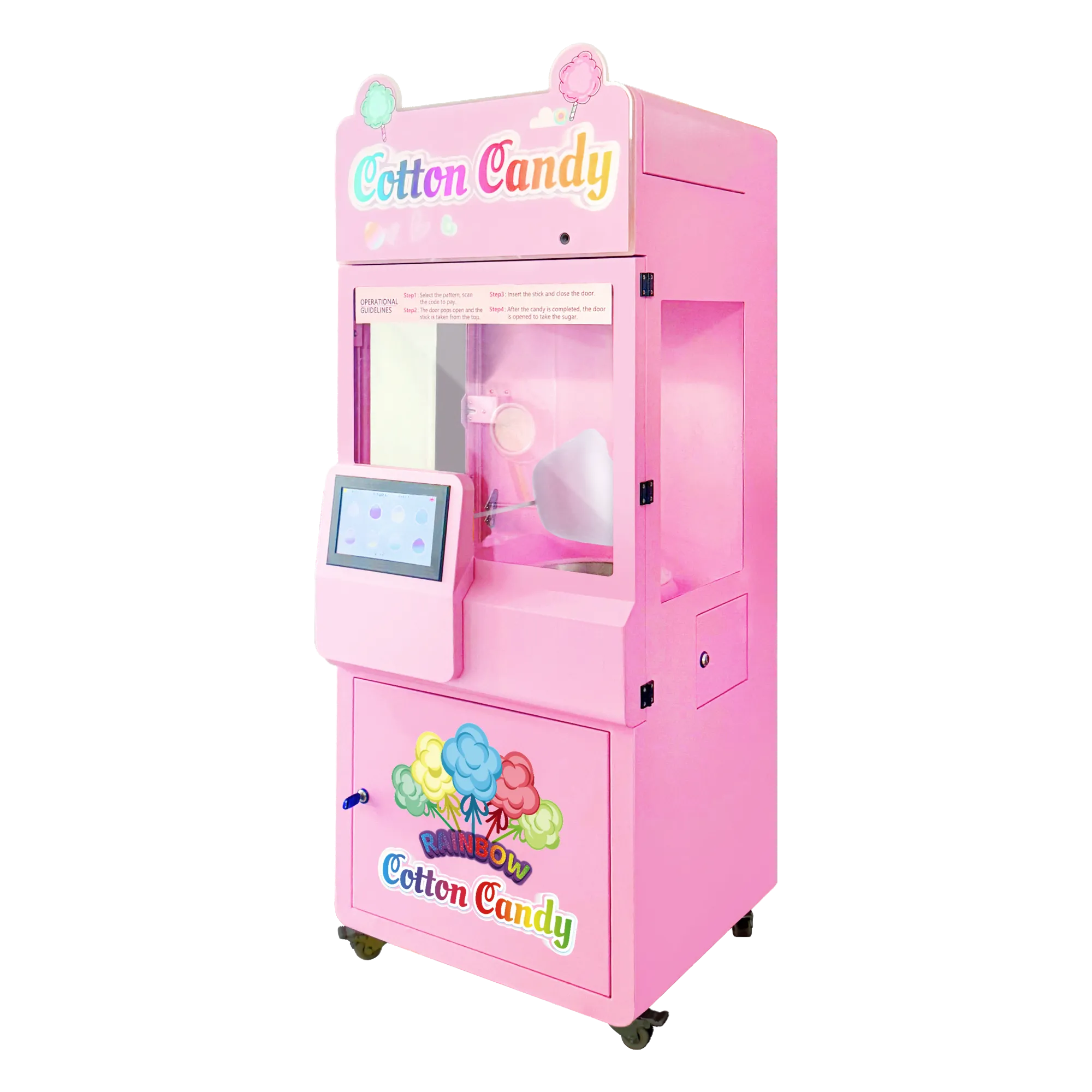
For a location you cannot attend throughout the day, the CB328 cotton candy vending machine is worth a close look. It combines automatic vending with coin, bill, card and QR payment options. Customers can choose, pay and collect through the machine, while cloud functions give you access to operating information away from the site.
That remote view has a practical purpose. Machine status, sales information, fault alerts and low-stock alerts help you decide when a visit needs attention. Screen-content updates let you manage the display remotely. You still need someone who can refill supplies, clean the machine and respond to faults, so consider what happens if an alert arrives while you are at work.
At 132 × 66 × 205 cm, CB328 needs a defined floor position. In a shopping centre or cinema's family area, mark out the cabinet and the space needed to use and service it. Check where customers will stand and how you will open the machine. Those details can change which position you agree to rent.
Language, logo, colour and media customisation give you ways to adapt the machine to the venue. Ask for a demonstration with the interface language and payment setup you intend to order. If CB525 also meets the site requirements, compare the two quotes on those same terms. The useful question is which delivered setup fits your operation and budget.
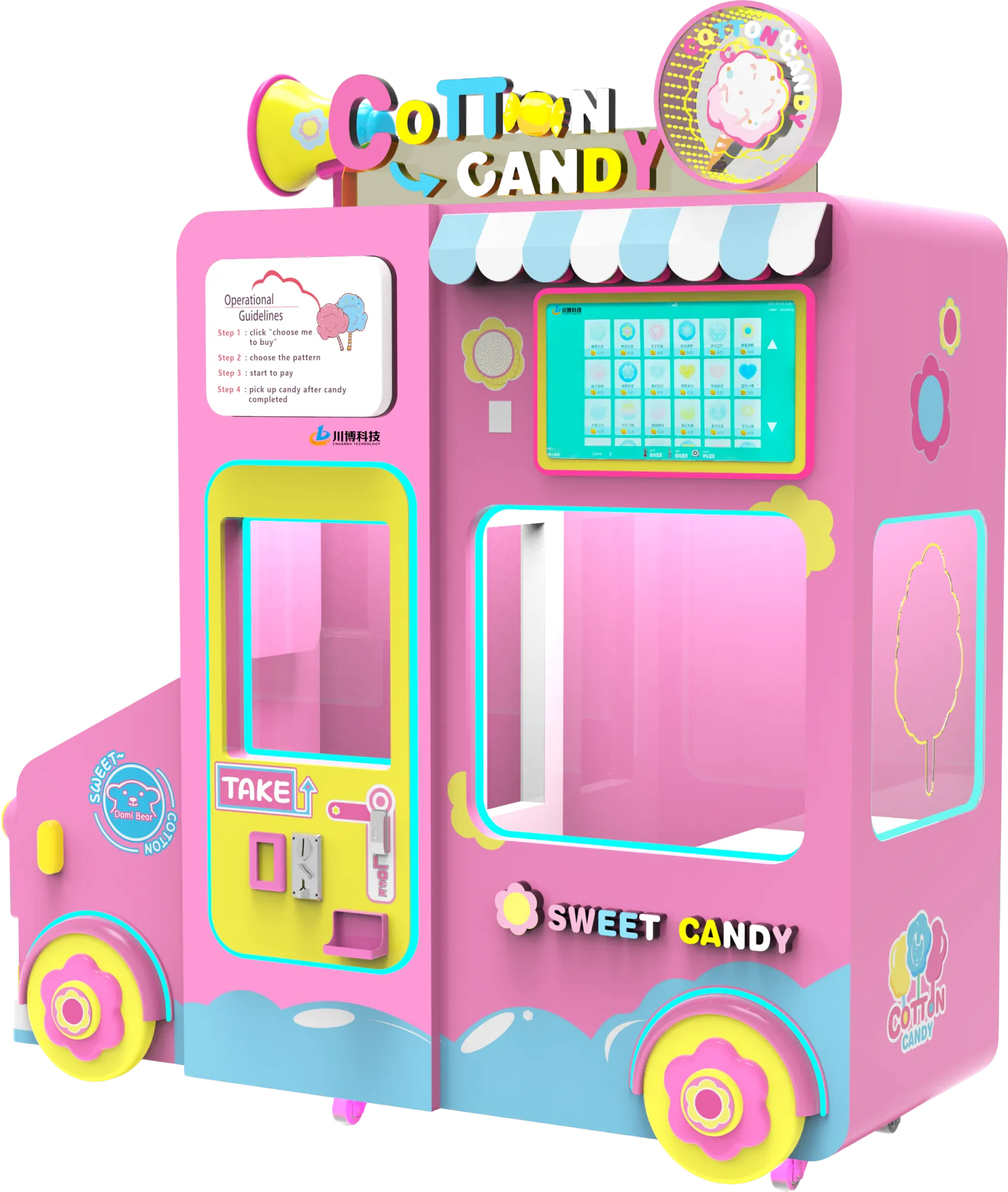
CB730 cotton candy vending machine for a cart-style display
The CB730 cotton candy vending machine makes sense when the display is part of the venue concept. Its cart-inspired cabinet offers a different visual format for a family entertainment area or themed attraction, alongside automatic preparation, pattern and colour selection, several payment methods and cloud management.
Give the venue manager a proposed layout early. CB730 measures 200 × 80 × 215 cm, making it wider than CB328 and CB525. A position with room for the cabinet, customer access and servicing may suit it well. In a narrow shop corner, that width could make another model easier to accommodate.
The cart styling gives you something specific to discuss with the venue: whether the appearance fits the surroundings and whether the space allocation works for both parties. Agree on the collection area and any queue space before settling the rent or commission. An appealing display still needs enough relevant customer demand to support the location's costs.
Check the route into the building as carefully as the final position. Ask for packed dimensions and handling instructions, then review doorways, lifts and changes in floor level. A cart-style exterior alone does not tell you how to move the equipment. Resolve unloading and placement with the people who will carry out the delivery.
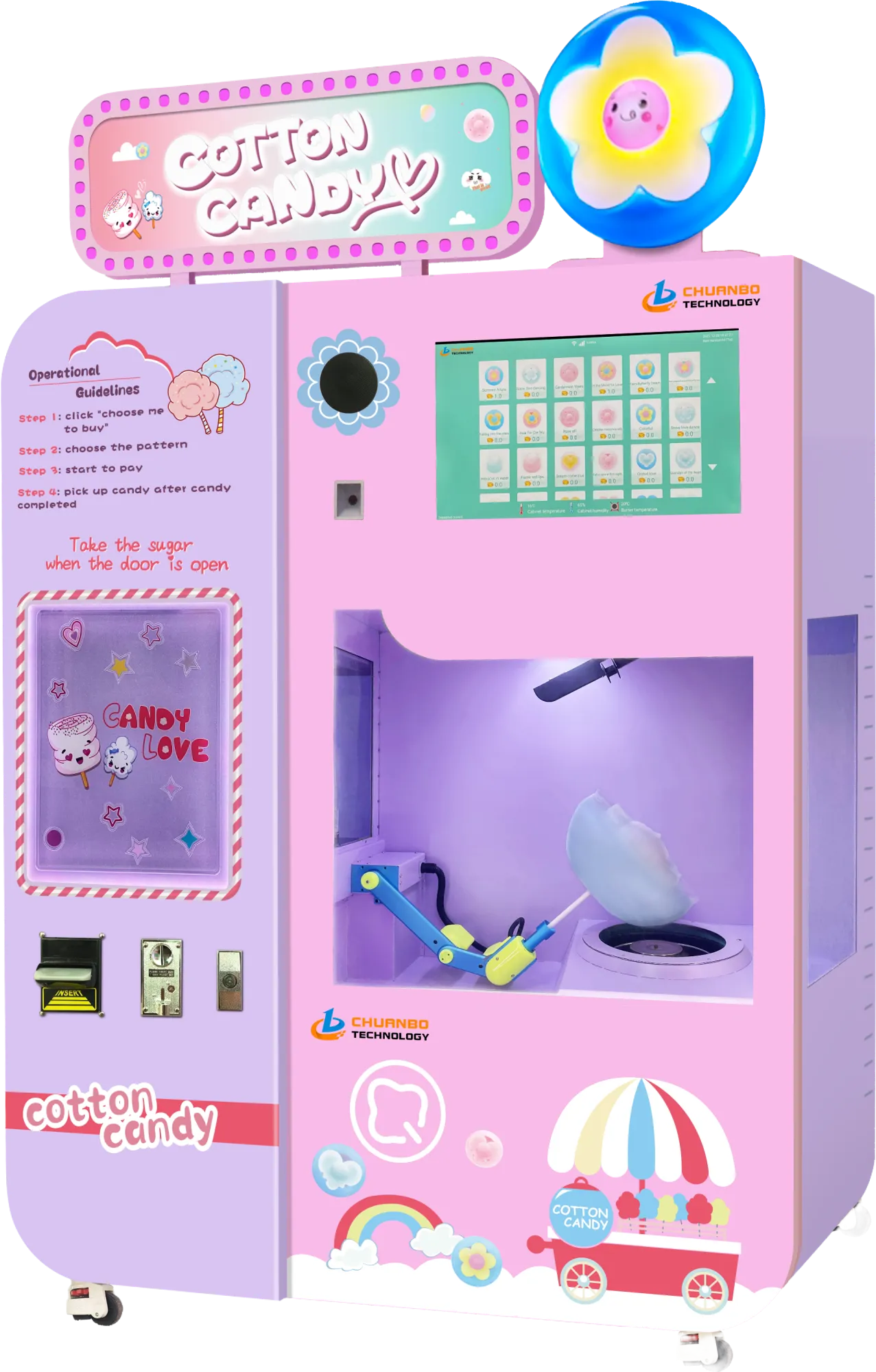
CB525 cotton candy vending machine for venue-specific customisation
Put the CB525 cotton candy vending machine on your shortlist when a venue has particular requirements for appearance or customer interaction. Its customisation options include exterior graphics, interface language, media, lighting and payment workflow. Those are useful discussion points when a shopping mall or entertainment venue needs to approve the installation.
For example, the venue may want graphics that match the surrounding area, a specific language on screen or an agreed media presentation. Include those requirements in the quotation and review the proposed setup before ordering. This gives the venue a concrete configuration to approve and gives you a clearer basis for comparing costs.
CB525 automates selection, payment, preparation and serving, with coin, bill, card and QR payment options and cloud management. These functions overlap with CB328. Compare the actual interface, local payment arrangement and included customisation in a demonstration of each model.
Delivery also deserves early attention. CB525 measures 135 × 70 × 210 cm and has a specified weight of 360 kg. Pass both figures to the person planning unloading and placement. Confirm the packed size, route to the final position and handling arrangements before shipment so that the machine can reach the space you have agreed to use.
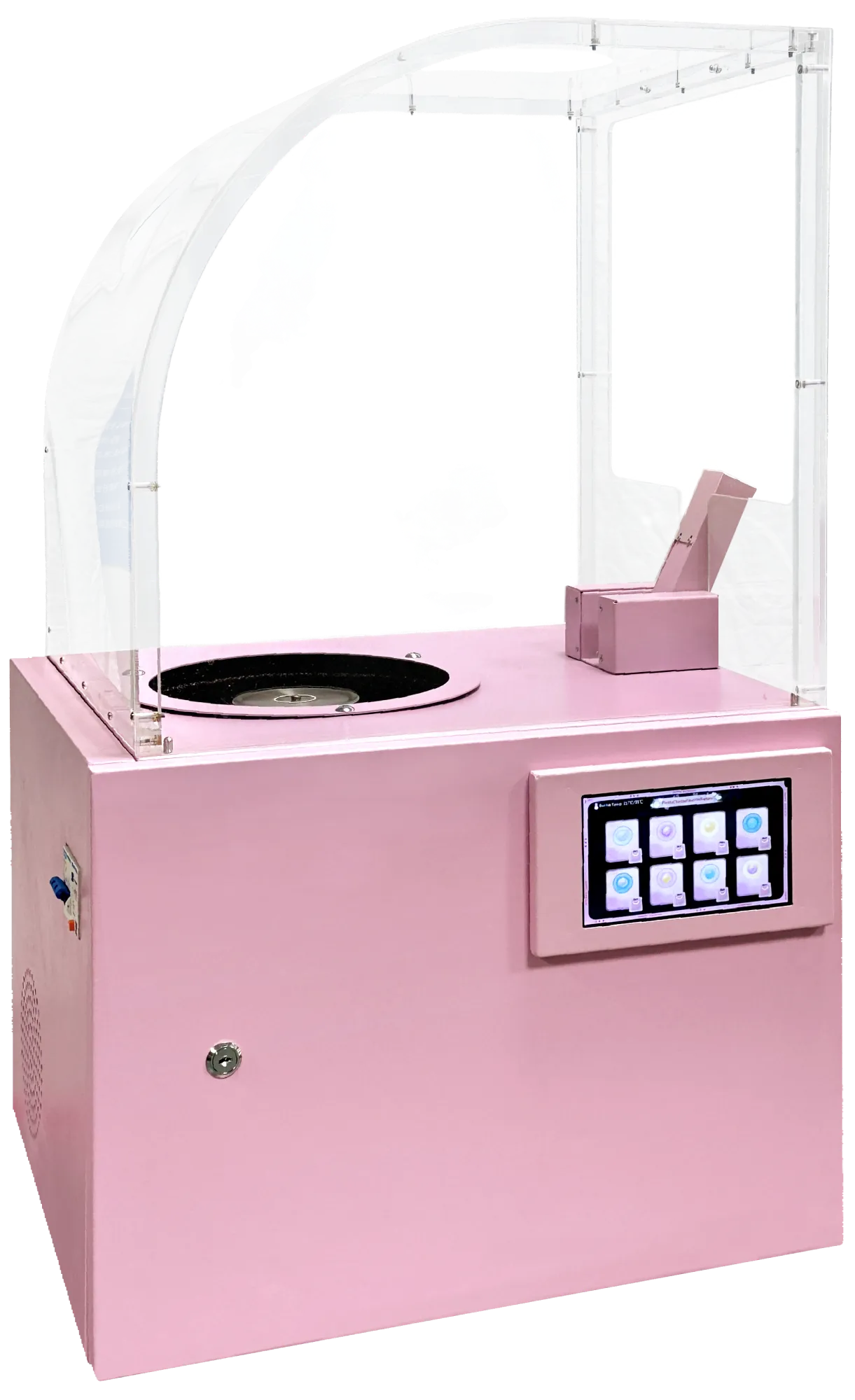
CB218H tabletop cotton candy machine for attended counters
An existing staffed counter gives the CB218H tabletop cotton candy machine a clear role to consider. Its 49 × 55 × 87 cm cabinet offers touchscreen selection and automatic preparation of eight round-style designs. Someone at the counter can handle the sale and help customers collect their cotton candy, subject to confirming the complete workflow.
Payment and remote-management systems are unspecified for this model. Before planning a self-service setup, establish how payment will be taken and which steps need an attendant. Ask to see the sequence from design selection through preparation and collection. For an existing shop, this also helps you judge how the activity would fit around your current service.
The tabletop format gives you a placement option that differs from a floor-standing vending kiosk. Check the work surface's load capacity and height, and leave access for replenishment and cleaning. Cable routing and the collection position need attention too, especially where the same counter serves other customers. Exterior colours and a logo can be customised, subject to the agreed specification.
For event use, obtain the weight, packed dimensions and transport instructions before arranging a vehicle or loading help. A small cabinet can still need careful handling. If the event involves outdoor operation, supply the expected temperature, humidity and exposure conditions for confirmation. That information is needed to assess the proposed setup.
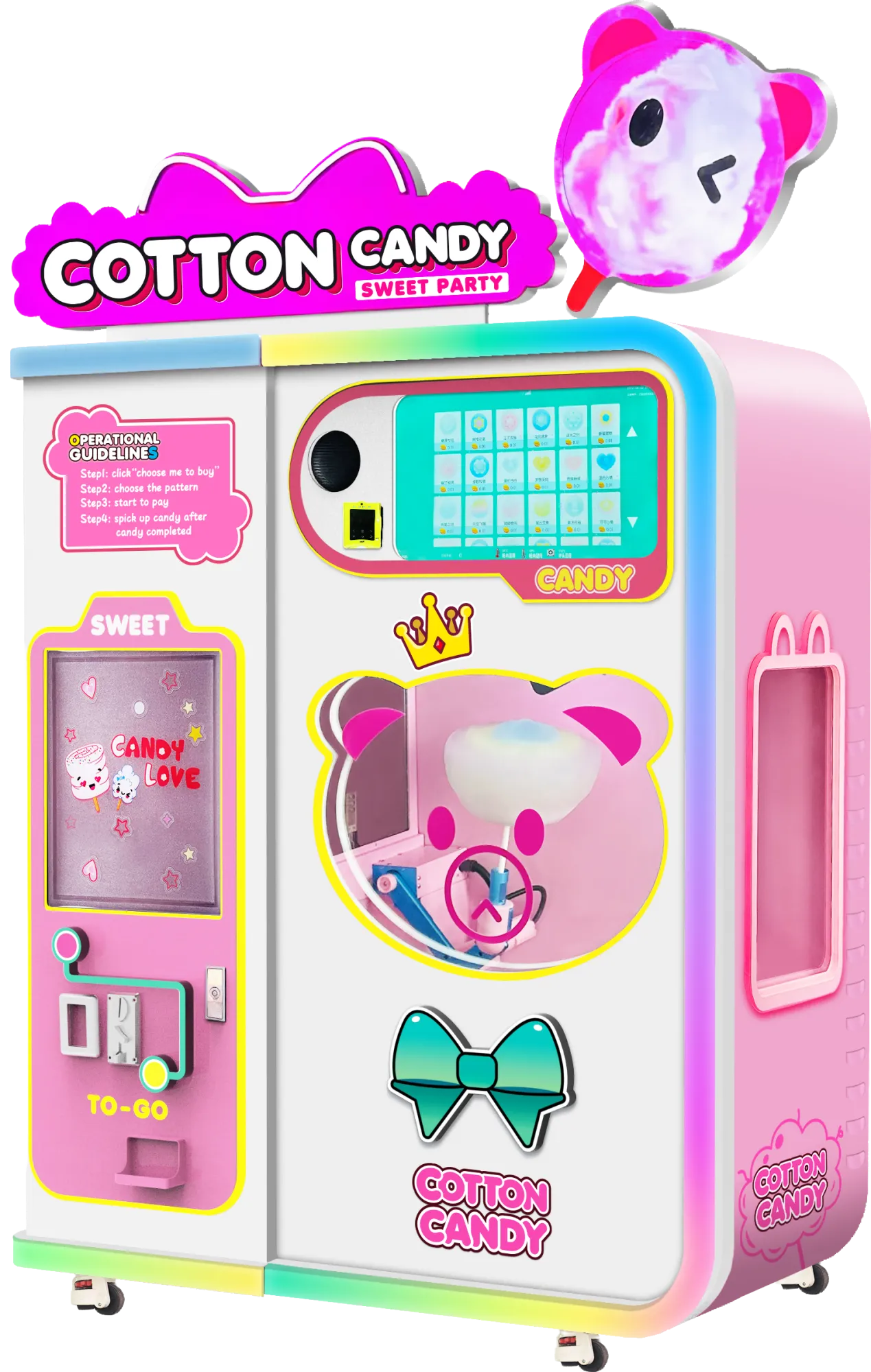
CB218 cotton candy vending machine for compact cash-payment sites
The CB218 cotton candy vending machine is a candidate when floor space is limited and coin or bill payment suits the customers. It combines automatic preparation with those payment methods in a 68 × 65 × 176 cm cabinet, with eight round-style choices.
An existing small business may have a usable corner that can accommodate this format. Measure beyond the cabinet itself: customers need room to collect their order, and you need access for refilling and cleaning. Make sure the venue agreement covers that working area as well as the machine's standing position.
Cash acceptance is useful only where it matches buying habits. If the location needs card or QR payment, get a written answer on whether a suitable CB218 configuration can be supplied. Remote management is also unspecified. Where cloud visibility is essential to your schedule, compare CB328, CB525 and CB730 while resolving those requirements.
CB218 includes an automatic high-temperature burner cleaning cycle after each order. Review the full cleaning instructions so you know which manual tasks remain. Replenishment, cash collection and fault response also belong in the weekly plan. The compact cabinet helps with placement; a quotation and a site budget will establish whether it fits the business financially.
Build your shortlist around one real location
For a staffed counter, begin with CB218H. Decide who takes payment and whether preparation and collection can fit the existing service. If customers need to pay independently, compare the integrated vending models against that requirement.
For a small self-service position, start with payment habits and service access. CB218 is a candidate where cash suits the location. CB328 and CB525 deserve comparison when you need several payment methods and remote information. For a venue that wants a cart-style display, add CB730 once its wider cabinet has a workable position.
Before planning several machines, put the costs for one location on paper. Include the configured machine, site preparation and opening supplies, then account for ingredients, sticks, payment fees, rent or commission, cleaning, travel and downtime. Use a realistic selling price and demand assumption, with nearby competition in view. Agree with the venue who pays which costs and what happens if you need to end or change the arrangement.
This exercise gives the model comparison a useful test. A machine needs to fit the space, the customer's payment habits and the time you can devote to keeping it ready for use. If one of those conditions fails, revisit the location or the model before committing to the order.
Check these 12 details before ordering online
Once you have a shortlist, ask for written answers to the same questions for each proposed model. This makes a CB328 versus CB525 comparison easier and exposes any unresolved requirements for the compact models.
- Exact model and included items. Confirm availability, hardware, software menu and optional equipment. Keep the agreed specification with the order so that both parties have the same record of what will be supplied.
- Delivery route and working space. Obtain cabinet and packed dimensions, weight and access requirements. Measure doorways and lifts, then check room for customers, open doors, replenishment and cleaning at the final position.
- Power and operating conditions. Request the rating plate details, installation instructions and plug requirements for the supplied version. Send the site's power supply details and intended environmental conditions for review before shipment.
- Payment at your destination. Specify the currency, required methods and payment provider. Establish who sets up the account, what fees apply and which connection is needed for the quoted system to work.
- Cloud access and connectivity. For models quoted with remote functions, review the actual status, sales and alert screens. Ask about account access, recurring charges and what you need to do if connectivity is lost.
- A complete transaction. Watch the offered menu, selection, payment where included, preparation and collection in sequence. Use the demonstration to check the customer instructions and identify any steps requiring an attendant.
- Supplies and replenishment. Get the exact sugar, stick and other material requirements for the model. Review the refill procedure and establish where you will source supplies before calculating ongoing costs.
- Cleaning and fault response. Obtain the manual and routine maintenance schedule. Identify the manual cleaning tasks, who will perform them and the information technical support needs when a fault occurs.
- The full project budget. Include the configured machine, supplies, payment setup, transport, import charges and site preparation. Add the venue's rent, commission and other agreed charges to the operating plan.
- Delivery and acceptance terms. Agree when the lead time starts, who handles shipping and unloading, and what to check on arrival. Record how you will verify that the machine matches the agreed order.
- Warranty and parts. Ask for the warranty scope, exclusions, support route and parts prices. Check how replacements reach your country and which repairs would need local assistance.
- Documents and local permissions. Request documents for the exact model and configuration. Confirm the applicable requirements for import, installation and food-business operation, along with the venue's permission to use the proposed location.
FAQ
Can CB218 or CB218H be supplied with card payment or cloud monitoring?
Ask Chuanbo to confirm the proposed configuration for your destination. CB218 specifies coins and bills, with remote management unspecified; both payment and remote systems are unspecified for CB218H. Send the required payment method, provider and cloud functions with your enquiry. If those features are essential, also compare CB328, CB525 and CB730, which offer payment and cloud options in their specifications.
Does a smaller cotton candy machine use less electricity?
All five models have a specified maximum power of 2,500 W. That rating and the cabinet dimensions do not establish electricity consumption during your operating day. Request consumption information for the intended setup and usage pattern, then use the installation instructions to check the site's supply requirements.
Can I move the machine if the first location does not work out?
Before planning a move, obtain the selected model's weight, packing information and transport instructions. CB525's specified weight is 360 kg, which makes handling arrangements an early planning issue. Review the venue agreement and the next site's space, access, power and permissions too. Those checks will show what a relocation would involve for your particular machine.
Turn Your Idea Into a Vending Machine People Remember.
Share your market, product concept and quantity. Our team will prepare a tailored OEM/ODM proposal.