
 EN
 es
 fr
 pt
 ru
 ar
 de
 ja
 ko
 he
 tr
 nl
 it
 pl
 uk
 sk
 th
 da
 ro
 sv
 lt
 bg
 fi
 hr
 no
 ga
 sl
The Best Locations for Smoothie Vending Machines: Maximizing Foot Traffic and Sales
Gyms, shopping malls and university campuses are useful starting points for a smoothie vending machine. Offices, hospital public areas and transport waiting areas also deserve consideration where customers can see the offer, stop comfortably and wait for a freshly prepared drink. Within each venue, shortlist positions that combine those conditions with practical access for replenishment and cleaning.
A busy building gives you a place to investigate. The placement decision depends on what happens beside the machine: who passes, when they pass and whether buying a smoothie fits that moment. Use the comparisons below to narrow your search, then test the exact position before making a longer commitment.
Which locations should you shortlist
Use these six venue types as a shortlist. For each one, assess the customer activity around the proposed position and check whether the venue can support the full buying and servicing process.
| Venue | Positions to investigate | Condition to check first |
|---|---|---|
| Gyms and fitness centers | Reception-side space, routes from changing rooms, post-class seating | Can members stop without blocking check-in or class traffic? |
| Shopping malls | Visible edges of seating areas, leisure routes, food-area approaches | Can shoppers read the offer and step out of the walking route? |
| University campuses | Student centers, dining lobbies, sports facilities, residence common areas | Do access hours and food rules match the intended buying occasion? |
| Offices | Shared break areas and routes used during work breaks | Are enough people present on the days you plan to serve? |
| Hospital public areas | Approved staff break spaces and public waiting-area edges | Can buying and waiting happen without disrupting circulation? |
| Transport venues | Approved waiting areas where passengers have time before departure | Do passengers have enough time to order and collect a drink? |
Swipe horizontally to view the full table.
Gyms and fitness centers
Compare arrival and departure routes
At a gym, examine where members go before and after exercise. Someone entering for a scheduled class may have little time to browse a menu. A member leaving the changing rooms or waiting near reception may have a different opportunity to buy. Observe those moments separately before choosing an entrance simply because everyone passes it.
A reception-side position offers visibility, but check-in queues may compete for the same floor space. An area along the departure route may give buyers room to wait, although it could be easy to miss from the main entrance. Compare both from the direction members actually approach; a screen facing the room can remain hidden from the people walking past it.
Watch a class finish before approving the spot
Imagine two proposed gym positions: a narrow space beside the front desk and a visible recess near post-class seating. The recess is worth testing if customers can reach it easily and wait clear of the corridor. The front-desk position could still perform better if the recess is outside the route members use.
Visit during an ordinary period and immediately after a class. Record whether several potential buyers arrive together and where a waiting customer would stand. Ask the supplier to demonstrate consecutive orders, including menu selection, payment, preparation and any interval before the next order. A preparation-time figure alone will not tell you whether the position can accommodate the post-class queue.
Shopping malls
Look for a place to step out of the crowd
For a mall placement, count people passing the proposed machine face rather than relying on the center's overall visitor number. Then check whether they can notice the menu, see the price and leave the walking stream to make a purchase. A high count at an escalator exit is less useful if stopping there obstructs people behind the buyer.
Compare that escalator position with a visible edge of a seating or leisure area. The latter may offer easier waiting, but fewer shoppers may pass close enough to notice the machine. Walk both approaches at normal pace. Check for columns, temporary displays or furniture that hide the screen, and confirm that any proposed sign is acceptable to mall management.
Assess nearby drink sellers and operating access
Nearby cafes and juice sellers give you something concrete to compare: their menus, prices, queues and opening hours. Their presence could mean competition for the same purchase, or it could reveal a time or route they do not serve well. Identify the specific gap you intend to test, such as access outside a nearby counter's hours, rather than assuming a food area automatically creates demand.
Observe a regular weekday and a comparable weekend period, noting promotions or events that change the walking route. Also check when staff can bring ingredients and cleaning supplies to the position. A spot with appealing customer exposure may be difficult to operate if service access is restricted during the hours when replenishment is needed.
University campuses
Match the position to a usable break
On a campus, investigate student centers, dining-hall lobbies, sports facilities and residence common areas. For each candidate, identify the buying occasion: a break between activities, a pause after exercise or access to a drink near accommodation. A busy classroom corridor needs closer examination if students are moving directly to their next lecture.
Compare a teaching corridor with a food-permitted common area nearby. The corridor may offer more pass-by traffic; the common area may offer time to choose and wait. Observe both during class changes and quieter periods. Include the academic calendar in the comparison, since a position assessed during term needs a separate plan for vacations and other low-attendance periods.
Check who can reach the machine and where drinks are allowed
The University of Notre Dame's vending information identifies smoothie vending in the North Dining Hall lobby and describes 24/7 access with a student ID. This illustrates a useful distinction for site evaluation: around-the-clock access can still apply to a defined group of users. Confirm the access conditions for the audience you intend to serve.
A library requires a more specific conversation than its total number of visitors. UCLA Library's food and drink rules permit food and drinks in some circumstances and exclude them from designated areas such as Special Collections. Those are UCLA's rules; obtain the proposed venue's own approval for the machine, drink consumption and operating noise before treating a library position as suitable.
Three other venue types to assess
Offices
Consider a shared break area or a visible route used during breaks. Ask the facility manager for attendance patterns by weekday and shift, then observe the proposed position when employees actually have time to buy. A large office building with limited occupancy on particular days needs a replenishment plan that reflects those days. Check how the offer fits alongside any existing pantry or catering service.
Hospital public areas
Assess approved staff break spaces or public waiting-area edges where customers can step aside to order. Check access for the intended staff or visitor group, nearby refreshment options and permitted servicing hours with the facility team. Keep the proposed service focused on ordinary beverage purchases; placement in a hospital does not establish suitability for patients with specific dietary needs.
Transport waiting areas
Investigate places where passengers wait with time available before departure. Separate these from ticket barriers, boarding queues and routes used in a hurry. Check that luggage and waiting buyers can fit beside the proposed machine, and confirm the drink-carrying rules for the relevant area. Total station or terminal traffic will not answer those position-specific questions.
How to compare two spots within the same venue
Once a venue is worth pursuing, ask for two possible positions. Observe each over equivalent periods using the same criteria. Keep a written record so that a quieter visit or a particularly busy event does not decide the comparison by itself.
| Criterion | What to observe | What to record |
|---|---|---|
| Visibility | Can approaching customers see the offer before passing it? | Approach direction, screen orientation and obstructions |
| Stopping space | Can someone order and wait clear of the main route? | Usable waiting area and conflicts with doors or queues |
| Time to buy | Are people on a break, waiting or rushing elsewhere? | Activity and time period, including class or departure peaks |
| Service at peaks | What happens if several orders arrive together? | Observed waiting and demonstrated consecutive-order cycle |
| Availability and access | Can customers reach it and staff keep it in service? | Access hours, replenishment route, stockouts and downtime |
Swipe horizontally to view the full table.
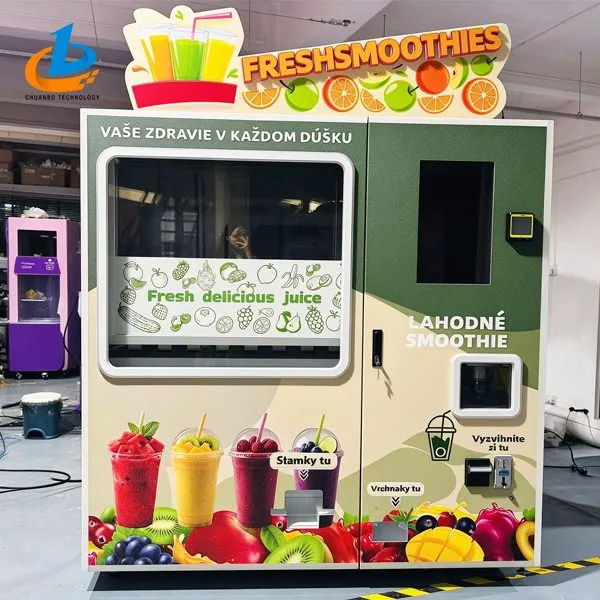
Map the actual equipment onto that space. Our CB Vending smoothie vending machine measures 170 cm wide, 100 cm deep and 225 cm high. Its base therefore occupies about 1.7 square meters, before customer space or maintenance clearance. Use the dimensions to check the proposed layout and delivery route, then request the installation drawing for the exact configuration.
Customers also need room to use the touchscreen and collect their drink. Mark those positions on the layout alongside doors, furniture and neighboring queues. Confirm maintenance access and utility connections before agreeing the site; a machine outline on a floor plan does not establish that the full installation will work.
Validate the position before making a longer commitment
Establish a fair comparison
Before installation, record pass-by traffic during fixed observation periods at each candidate position. Use the same counting rule and separate ordinary periods from peaks. If possible, agree a site trial with the venue, including how long observation can continue, which adjustments are permitted and how relocation would be handled.
After installation, compare equivalent days and time periods while keeping price, menu and promotions as consistent as practical. Record changes such as holidays, events or a nearby outlet closing. Choose a trial period that includes the venue's normal operating pattern; a single busy day provides little basis for judging a recurring location cost.
Read sales alongside service conditions
Record completed orders together with stock availability, faults and time out of service. CB Vending's cloud backend provides real-time sales data, machine-status monitoring and fault notifications, which can support this review. Add on-site observations of visibility, waiting and people leaving the queue; sales records alone do not explain why someone passed without buying.
If you track completed orders per 100 pass-by events, count orders only within the matching observation period. Treat the result as a local comparison measure. One person may pass several times, and one order may cover several drinks, so this figure is not a unique-customer conversion rate or a universal benchmark.
Make the adjustment that matches the problem
- If people pass without noticing the offer, investigate screen orientation, obstructions or an approved sign before moving to another venue.
- If people browse but leave before paying, observe the choice and payment steps and check the price and menu fit.
- If customers leave while waiting, examine the demonstrated service cycle and available queue space before seeking still more traffic.
- If weak sales coincide with stockouts or faults, resolve availability and repeat a comparable observation period before judging the position.
Evaluate the sales result against the site's rent or commission and the work needed to keep it supplied. A position generating more orders can still be less attractive if access restrictions or location costs absorb the difference. Use observed trading and operating conditions when deciding whether to retain the spot.
FAQ
Which utility details should I confirm before agreeing a location?
For the proposed CB Vending configuration, request the electrical supply and connection requirements, water arrangement, drainage or waste-liquid handling, and cleaning provisions. Send the supplier a plan showing available connections and the service route. Ask which conditions require changes to the site so you can include that work in the placement decision.
Can I place a smoothie vending machine outdoors?
Obtain confirmation for the exact model and enclosure before selecting an exposed position. Provide the temperature and humidity range, direct sun or rain exposure, shelter details and utility arrangement. Request written operating limits and required protection from CB Vending; refrigeration for ingredients does not establish outdoor suitability for the whole machine.
Can the menu and payment options suit a gym or campus?
CB Vending supports preset smoothie recipes and customer ingredient selection, with card, banknote, coin and QR payment options. Confirm the recipes, ingredient storage requirements and payment provider for your country and venue. If the venue requires a campus card, staff account or another closed payment system, request confirmation of that integration before assuming it is included.
Turn Your Idea Into a Vending Machine People Remember.
Share your market, product concept and quantity. Our team will prepare a tailored OEM/ODM proposal.